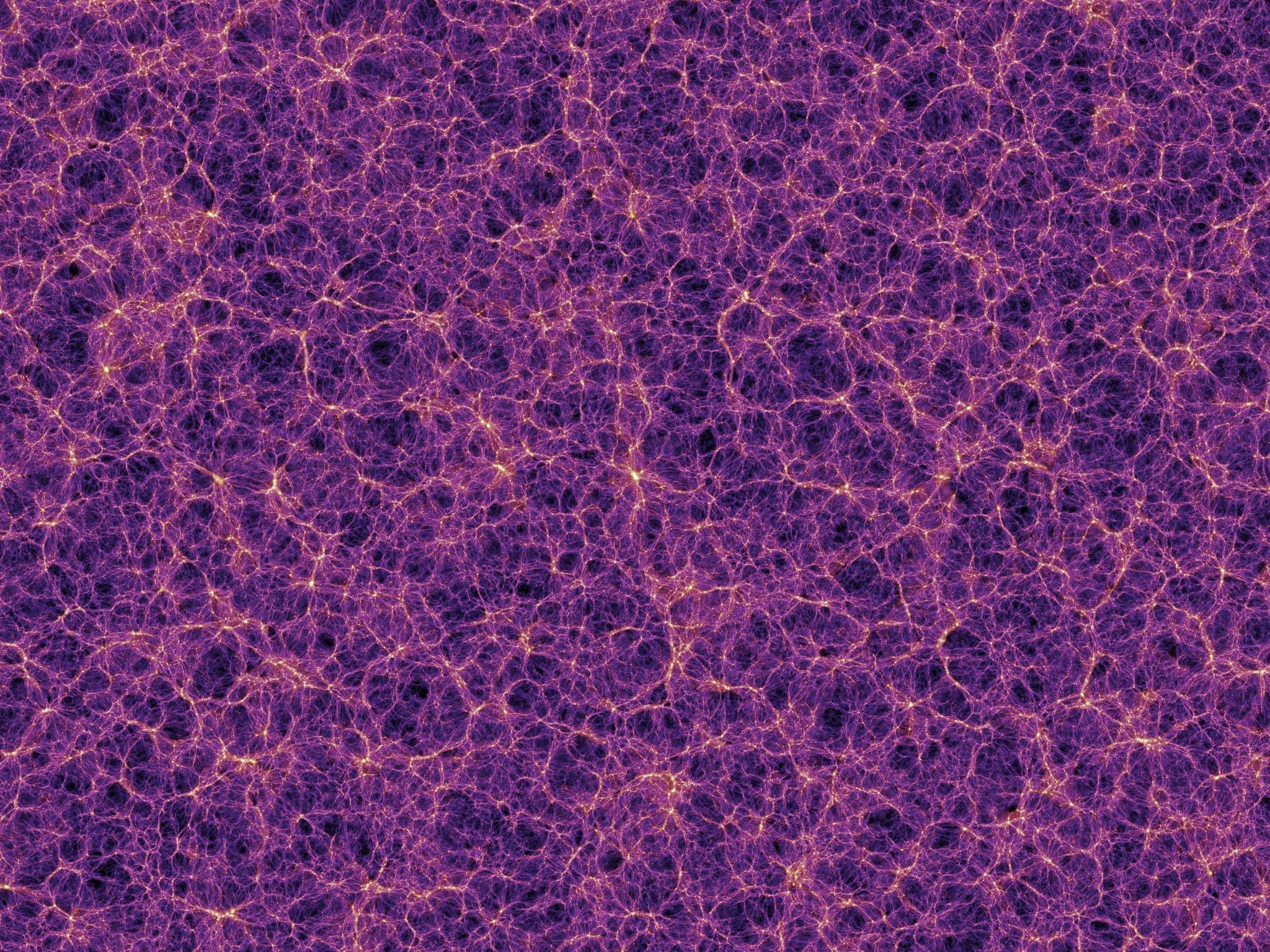
The region of space simulated was a cube with about 2.4 billion light years as its length (less than 1.5% of the OBSERVABLE universe)! This volume was populated by about 20 million "galaxies". A super computer, located in Garching, Germany, executed the simulation code for more than a month. The output of the simulation needed about 25 Terabytes for storage.
Code: Select all
1 Mpc = 3,261,636.26 light years
e.g. The Andromeda Galaxy (our nearest neighbor galaxy) is 0.77 Mpc away from the Earth.

Each dot is a galaxy like our own Milky Way galaxy:
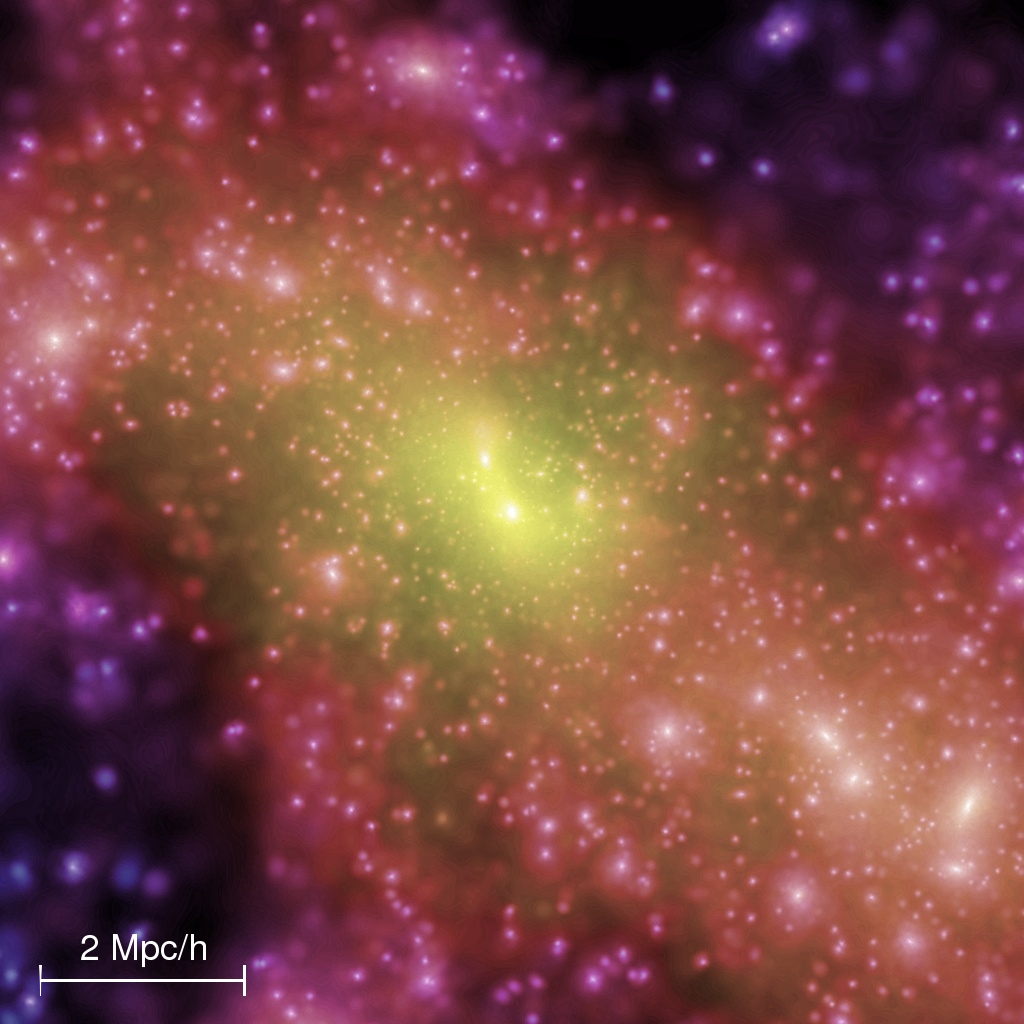
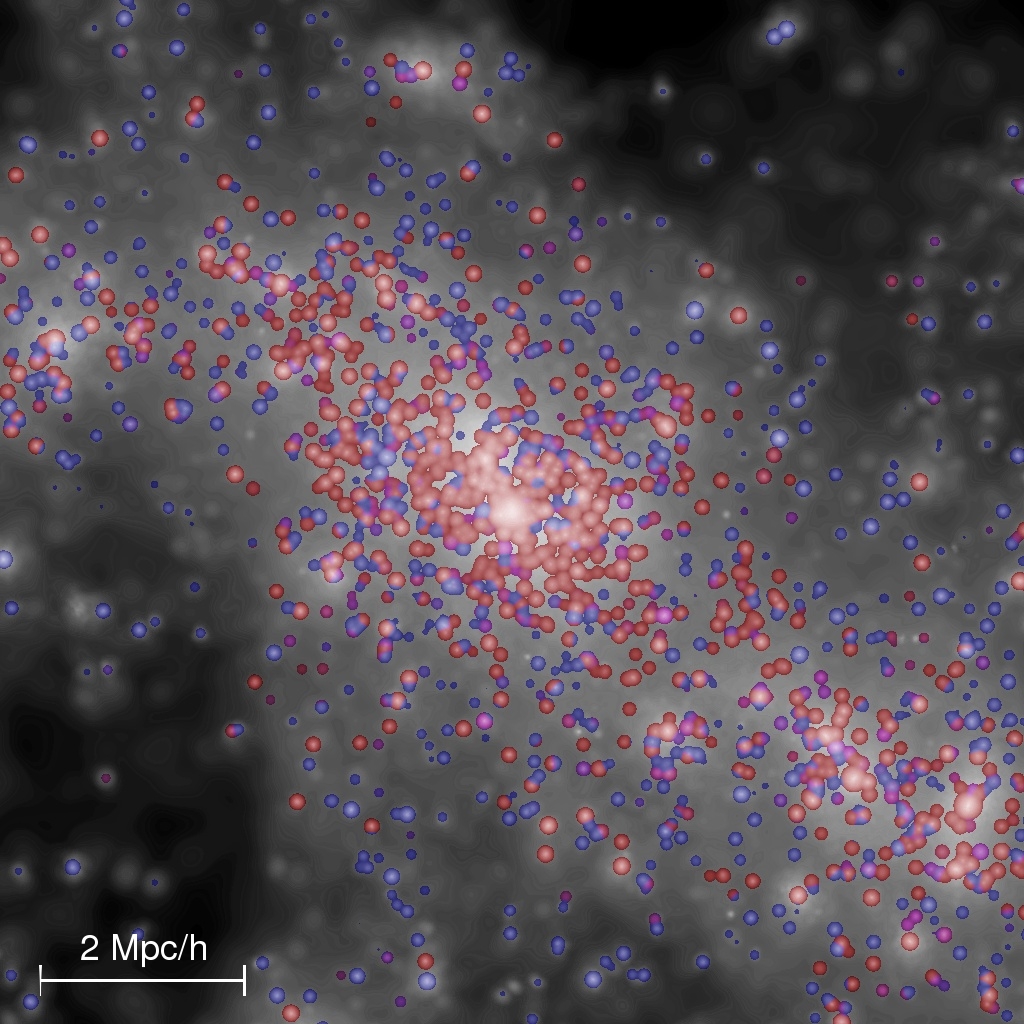
Original image:
http://www.mpa-garching.mpg.de/galform/millennium/seqB_063.jpg
The Milky Way galaxy in perspective:
Code: Select all
The interactive image shown in the video:
http://www.spitzer.caltech.edu/Media/mediaimages/zooms/ssc2008-11a/index.html


Solar System and other stars WITHIN the Milky Way galaxy in perspective:

http://img4.imageshack.us/img4/1023/111aby.jpg
The Fomalhaut system (the typical planetary system in our Milky Way galaxy) compared to our Solar system (scale):

367 exoplanets discovered thus far WITHIN the Milky Way galaxy
http://www.planetary.org/exoplanets/list.php?pp=0

Sounds of space (scary):
planets
Code: Select all
pulsars, neutron stars, black holes, etc...
Code: Select all
Code: Select all
Code: Select all
Code: Select all
Life on Earth and in the universe in perspective:
-Life has been on this planet for* 3.7 billion years and humans have been on this planet for only 200,000 years, which means we make up only 0.0054% of life's history on earth.
-Earth's total mass is ~5.9736×10^24 KG while the total biomass on Earth is ~7×10^13 KG, which means the percentage of life on earth is 0.00000000117% (majority of Earth's biomass resides undersea sustained by the heat of Earth's core and not the Sun's radiation).
-The solar system's* total mass is ~1.98892×10^30 KG while earth's mass is ~5.9742×10^24 KG, which means the earth makes up 0.0003% of the solar system.
-The Milky Way galaxy has a mass of ~200 billion solar masses which means our solar system makes up only 0.0000000005% of the Milky Way galaxy.
-The known universe is composed of less than 2% baryonic matter (matter consisting of protons, neutrons, and electrons... the stuff we, the earth, solar system, and galaxy are made of), which makes dark matter the most common form of matter in our universe and shows that our universe is far more suited for the creation of black holes.
-Our Sun is a third generation star, meaning the previous stars could of collapsed the wrong way and never of made the Sun and our solar system, therefore we never existing. And this isn't uncommon, by our standards the majority of star systems are failed star systems.
-Most (95%) of the "normal" baryonic matter in the universe is in the form of multi-million-degree "hot cluster gas" that forms an intergalactic medium in clusters of galaxies. So in the Universe as a whole, there is 20 times as much hot intergalactic plasma as there are stars. Stars are an accident.
Code: Select all
Code: Select all
Code: Select all
Code: Select all
http://www.worldometers.info/
Your life in perspective:
In a 70 year lifetime (70 orbits around a ball of hydrogen) the average human heart beats 2.52 billion times. 70 years = 37,000,000 minutes = 614,000 hours.
Code: Select all
(your heart pumps iron, and iron comes from the core of stars... dead stars)
Yeah, basically the universe is awesome, but it doesn't care if you exist.