Misconceptions within Science

Anything else. Post a funny site or tell us about yourself. Discuss current events or whatever else you want. Post off topic threads here.
Post Reply
User avatar
Grandpa
Active Member
Posts: 867
Joined: Tue Feb 26, 2008 5:54 am
Quick Reply: Yes
Location: Off Topic

Misconceptions within Science

Post by Grandpa »

SCIENCE MISCONCEPTIONS

William J. Beaty is part of the UW staff in WA state.
He calls himself "The Science Hobbyist"
One of his sites can be found here: Science Misconceptions

Another of my favorites is "The Bad Astronomer". He doesn't stick to astronomy only o.O

Phil Plait wrote:"For some reason, no one has claimed that it’s Jesus smiling.
Maybe Jesus hated grapes.
That would explain why he didn’t turn water into Welch’s."

Image

Below I'll quote the Science Hobbyists attempt to debunk a common (K-6) misconceptions about gravity as as example.
First though, if you like these types of websites, please allow me to ask you to link / quote and share some of yours in reply.
The Science Hobbyist said:
Bill Beaty wrote:GRAVITY IN SPACE IS ZERO? WRONG.

Everyone knows that the gravity in outer space is zero.
Everyone is wrong.

Gravity in space is not zero, it can actually be fairly strong. Suppose you climbed to the top of a ladder that was 300 miles tall. You would be up in the vacuum of space, but you would not be weightless at all. You'd only weigh fifteen percent less than you do on the ground. When 300 miles out in space, a 200lb person would weigh 170lb. Yet a spacecraft can orbit 'weightlessly' at the height of your ladder! While you're up there, you might see the Space Shuttle zip right by you. The people inside it would seem as weightless as always. Yet on your tall ladder, you'd feel nearly normal weight. What's going on?

The reason that the shuttle astronauts act weightless is that they're inside a container which is FALLING! If the shuttle were to sit unmoving on top of your ladder (it's a strong ladder,) the shuttle would no longer be falling, and its occupants would feel nearly normal weight. And if you were to leap from your ladder, you would feel just as weightless as an astronaut (at least you would until you hit the ground!)

So, if the orbiting shuttle is really falling, why doesn't it hit the earth? It's because the shuttle is not falling down, it is moving very fast sideways as it falls, so it falls in a curve. It moves so fast that the curved path of its fall is the same as the curve of the earth, so the Shuttle falls and falls and never comes down. Gravity strongly affects the astronauts in a spacecraft: the Earth is strongly pulling on them so they fall towards it. But they are moving sideways so fast that they continually miss the Earth. This process is called "orbiting," and the proper word for the seeming lack of gravity is called "Free Fall." You shouldn't say that astronauts are "weightless," because if you do, then anyone and anything that is falling would also be "weightless." If we drop a book, does gravity stop affecting it, should we say it becomes weightless? If so, then why does it fall? "Weight" is the force which pulls objects towards the Earth, and this force is still there when objects fall.

So to experience GENUINE free fall just like the astronauts, simply jump into the air! Better yet, jump off a diving board at the pool, or bounce on a trampoline, or go skydiving. Bungee-jumpers know what the astronauts experience.
I like "Science Hobbyist" and others because they explain in a manner that is easy enough to understand.

Unknown Source wrote:Wisdom does not consist in knowing more that is new, but in knowing less that is false.

Please reply quoting your favorites from my links above, or better yet, others of your own. :D

~Granps

Image
Last edited by Grandpa on Sun Jun 08, 2008 6:25 pm, edited 2 times in total.

User avatar
cpinney
Ex-Staff
Posts: 5718
Joined: Sun Aug 26, 2007 8:34 am
Quick Reply: Yes
Location: Maine, USA
Contact:

Re: Science Misconceptions

Post by cpinney »

holly shit a grape.
Image

User avatar
dom
Global Moderator
Global Moderator
Posts: 9962
Joined: Wed Mar 08, 2006 10:46 pm
Quick Reply: Yes
Location: västkustskt

Re: Science Misconceptions

Post by dom »

cpinney wrote:holly shit a grape.


Dear sir,

Image
Image

User avatar
cpinney
Ex-Staff
Posts: 5718
Joined: Sun Aug 26, 2007 8:34 am
Quick Reply: Yes
Location: Maine, USA
Contact:

Re: Science Misconceptions

Post by cpinney »

dom wrote:
cpinney wrote:holly shit a grape.


Dear sir,

Image


holly shit a coffee maker.
Image

User avatar
Grandpa
Active Member
Posts: 867
Joined: Tue Feb 26, 2008 5:54 am
Quick Reply: Yes
Location: Off Topic

Re: Science Misconceptions

Post by Grandpa »

I've seen the jebus toast b4, silly...

Image
Code: Select all

User avatar
Tarantulas
New Member
Posts: 41
Joined: Sun Apr 27, 2008 5:06 pm
Quick Reply: Yes
Location: Off Topic

Re: Science Misconceptions

Post by Tarantulas »

Phil Plait wrote:"For some reason, no one has claimed that it’s Jesus smiling. Maybe Jesus hated grapes.


Grandpa wrote:That would explain why he didn’t turn water into Welch’s."
Image


rofl a smiling grape, why Jesus ? why not a alien smile

User avatar
Barotix
Ex-Staff
Posts: 9250
Joined: Tue Jul 10, 2007 12:55 pm
Quick Reply: Yes
Location: Sand

Re: Science Misconceptions

Post by Barotix »

oO Scientist never claimed there is 0 gravity in space, free-fall acceleration is common knowledge for the scientific mind. This topic should be entitled "Social Misconceptions", as many of the things society believes to be facts, are false.
Maddening
Image

User avatar
Rainigul
Senior Member
Posts: 4490
Joined: Thu Mar 29, 2007 5:43 pm
Quick Reply: Yes
Location: Pacific

Re: Science Misconceptions

Post by Rainigul »

I thought everyone knew orbit was simply gravity? How do you think the moon or planets work? We really are getting closer to the sun and the moon closer to us, but just VERRRYYYYYYY slowly, it is possible to get perfect orbit, where the object in orbit stays the same distance from the object it is orbiting, but it's hard.

The concept of 0 gravity in space however is pretty much true though, it's not technically ZERO gravity, but it's so small, you generally don't get pulled towards any specific object so significantly that it is considered "zero gravity".

Orbit is fun.

P.S.

cpinney wrote:holly shit a coffee maker.


[NSFW]
Spoiler!
[/NSFW]

User avatar
Grandpa
Active Member
Posts: 867
Joined: Tue Feb 26, 2008 5:54 am
Quick Reply: Yes
Location: Off Topic

Re: Science Misconceptions

Post by Grandpa »

Barotix wrote:oO Scientist never claimed there is 0 gravity in space, free-fall acceleration is common knowledge for the scientific mind.
This topic should be entitled "Social Misconceptions", as many of the things society believes to be facts, are false.
Yeah, like science doesn't make mistakes...
Just kidding, my friend, but I'm not convinced the thread name should be changed. These are things that Science teachers (some with Masters degrees) teach to our youth. Misconceptions propagated to our K - 6th grades. To me, it's bad enough to be ignorant, but to compound it by suggesting expertise and teaching the lie? Seven (7) time worse.

Going cruising (surfing?) for another. I'll pick the next one that either debunks something I thought true or didn't think enough about when young <~~ there are lots. Will edit with the next I find...

[RESERVED EDIT]: > this spot intentionally left blank < ---> How about "Scientists use the Scientific Method". Yeah, that might do nicely...

It was the top one - too easy to find:Image

MYTH: SCIENTISTS USE THE SCIENTIFIC METHOD
CORRECT: THERE IS NO SINGLE "SCIENTIFIC METHOD." IT IS A MYTH


The rules of a science-fair typically require that students follow THE SCIENTIFIC METHOD, or in other words, hypothesis-testing. The students must propose a hypothesis, test it by experiment, then reach conclusions. This supposedly is "The Scientific Method" used by all scientists.

Unfortunately this is wrong, and there is no single Scientific Method as such. Most scientists don't follow The Scientific Method in their daily work. "The Scientific Method" is a myth spread by school books. It is an extremely widespread myth, but this doesn't make it any more real. "The Scientific Method" is part of school and school books, and is not part of real science. Real scientists use a large variety of methods (perhaps call them "The Methods of Science" rather than "The Scientific Method.") Hypothesis-testing is one of these, but it certainly is not the only one, and it would be a mistake to elevate it above all others. We shouldn't force children to memorize it, and we shouldn't use it to exclude certain types of projects from science fairs.

There are many parts of science that cannot easily be forced into the "hypothesis/experiment/conclusion" mold. Astronomy is not an experimental science, and Paleontologists don't perform Paleontology experiments... so studying dinosaurs or stars must not be science? Or, if a scientist has a good idea for designing a new kind of measurment instrument (e.g. telescope), that certainly is "doing science", but where is The Hypothesis? Where is The Experiment? The Atomic Force Microscope (STM/AFM) revolutionized science. Yet wouldn't building such a device be rejected from many science fairs? It's not an experiment. The creators of the STM weren't doing science when they came up with that device? The Nobel prize committee disagrees.

Forcing kids to follow a caricature of scientific research distorts science, and it really isn't necessary in the first place.

Another example: great discoveries often come about when scientists notice anomalies. Isaac Asimov said it well: "The most exciting phrase to hear in science, the one that heralds new discoveries, is not 'Eureka!' (I found it!) but 'That's funny...' " This suggests that lots of important science comes NOT from proposing hypotheses or even from performing experiments, but instead from learning to see what nobody else can see. Scientific discovery comes from something resembling "informed messing around," or unguided play. Yet many educators treat science as deadly serious business, and "messing around" is sometimes dealt with harshly.

Sir Peter Medawar wrote:"Ask a scientist what he conceives the scientific method to be and he adopts an expression that is at once solemn and shifty-eyed: solemn, because he feels he ought to declare an opinion; shifty-eyed because he is wondering how to conceal the fact that he has no opinion to declare."

- Sir Peter Medawar
Last edited by Grandpa on Sat Jun 07, 2008 5:03 am, edited 1 time in total.

User avatar
dom
Global Moderator
Global Moderator
Posts: 9962
Joined: Wed Mar 08, 2006 10:46 pm
Quick Reply: Yes
Location: västkustskt

Re: Science Misconceptions

Post by dom »

Grandpa wrote:Misconceptions propagated to our K - 6th grades. To me, it's bad enough to be ignorant, but to compound it by suggesting expertise and teaching the lie?


Like teaching that the planet is only several thousand years old?
Image

User avatar
Grandpa
Active Member
Posts: 867
Joined: Tue Feb 26, 2008 5:54 am
Quick Reply: Yes
Location: Off Topic

Re: Science Misconceptions

Post by Grandpa »

dom wrote:
Grandpa wrote:Misconceptions propagated to our K - 6th grades. To me, it's bad enough to be ignorant, but to compound it by suggesting expertise and teaching the lie?


Like teaching that the planet is only several thousand years old?
The Young Earth Theory? Yes, like that. So many people can't (or won't) admit or say "I dunno". Oh, wait! Were you suggesting that I said THAT? I don't think I did. I'm kinda waiting for more evidence and may never make up my mind on that one. Barotix suggested DNA might have answers for us and I'd agree, but really I doubt that most students of the subject will be able to stand away from their entrenched positions enough to hear truth even if it hit them between the eyes.

Funny how invested we get in our assumptions, isn't it?

Image

~Granps

User avatar
satman83
Site Contributor
Posts: 9541
Joined: Tue Oct 31, 2006 9:54 pm
Quick Reply: Yes
Location: London
Contact:

Re: Science Misconceptions

Post by satman83 »

lol yea that one makes me laugh, that the earth is 7000 years old, yet the first traces
of civilization have been around almost 10,000 years :roll:

this planet is probley more like 4000 million (4 billion) years old (< based on the
oldest carbon dated rock found) and its estimated that the universe was created some
15 billion years ago (< based of the movement of galaxies and other steller bodies when
compared to our own), also due to the fact that we are still moving from the center
it tells us that even after 15 billion years that the "Big Bang" is still happening.

Out own system wasn't the first one here either, there was an even older star system
but that went nova and from it formed our new system.

but the main thing that gets to me is how people still cling to the old beliefs and
misconceptions even after year after year we find out more about our existence in
this universe of ours. Or how people watch a film and TV show and take it to be
fact, for example the movie "Sunshine". I mean if the sun was "dying" (which technically
all suns are seeing how they use up their supply and either blow up or impoled)
there is not much anyone can do...and putting a nuke into it...yea, thats going to
end well :roll:
Image

User avatar
Grandpa
Active Member
Posts: 867
Joined: Tue Feb 26, 2008 5:54 am
Quick Reply: Yes
Location: Off Topic

Re: Science Misconceptions

Post by Grandpa »

Age of the Earth?
It's not strictly speaking a 'misconception' unless somebody actually says they 'know'.
Fact is, we don't.
There are debates amongst theistic scientists about the subject and there are debates amongst non-theist scientists as well.
The two camps can't even agree with themselves, it's doubtful that I can have a valid opinion.

Here is a pretty fair presentation of both sides in case you are actually interested:
Summary wrote:None of the three listed views regarding the age of the Earth and the universe (young Earth creationist, old Earth creationist, old Earth non-theist) seem to be fully satisfactorily explained if both current scientific understanding and fundamental Biblical claims are both highly regarded.
So there I am. For me it's like that. Both current scientific knowledge (I hesitate to say 'understanding') and fundamental biblical claims (I hesitate to say 'truth') are held in high regard. Further, parts of both are held (by me) in deep disdain.
Suffice it to say,
Grandpa wrote:QUESTION: How old is the Earth?
ANSWER: Like I said before, "I dunno"..

The current age estimate accepted by most Scientists for the Earth and our solar system is 4.54 billion years, plus or minus 0.02 billions years. What is this based on? This estimate was deduced from the ratios of different lead isotopes found in meteorites, Moon rocks, and Earth rocks. By other means, the oldest age estimate, to date, for an Earth rock is 3.96 billion years (Slave Province, Canada). The oldest age estimate for a meteorite is 4.6 billion years.

G. Brent Dalrymple wrote:"The best value for the age of the earth is based on the time required for the isotopic composition of lead in the oldest (2.6-3.5 b.y.) terrestrial ores, of which there are currently only four [235U to 207Pb to 238U to 206Pb], to evolve from the primordial composition, recorded in meteoritic troilite, to the composition at the time (measured independently) the ores separated from their parent rocks in earth's mantle. These calculations result in ages for the earth of 4.42 to 4.56 b.y. with a best value of 4.54 b.y."¹

EVOLUTIONARY AGE OF THE UNIVERSE:

The age of the universe has been estimated by astronomers from the velocity and distance of other galaxies as they recede from earth's perspective in the expanding universe. These estimates range from 7 to 20 billion years, depending on whether the expansion is considered to be constant or slowing due to gravitational attractions of galaxies to each other.

As for Age of the Universe thoughts determined by astronomers:
Image
The 62nd General Assembly of the United Nations has designated 2009 as the International Year of Astronomy. I would expect much more information to be made publicly available soon.

~Granps


FOOTNOTES:
¹ G. Brent Dalrymple, "So How Old Is the Earth, Anyway?," NCSE Reports, Volume 11, No. 4 (Winter 1991), pp. 17., also see: G. Brent Dalrymple, The Age of the Earth (Stanford: Stanford University Press, 1991).


MORE ON TOPIC:
Other than Age of the Universe debates (which seem to be never ending) are there other Scientific (or Social, he asks with a tip o' the hat to Barotix) Misconceptions you know of?
Last edited by Grandpa on Sat Jun 07, 2008 8:34 am, edited 2 times in total.

deep.in
Advanced Member
Posts: 2133
Joined: Mon Mar 19, 2007 11:55 am
Quick Reply: Yes
Location: .........
Contact:

Re: Science Misconceptions

Post by deep.in »

The more you think about this, the more questions you have. So, i just ignore stuff like this :)
<<banned from SRF for bot admission. -SG>>

User avatar
takolin
Senior Member
Posts: 4238
Joined: Wed Jan 03, 2007 11:13 am
Quick Reply: Yes
Location: Life

Re: Science Misconceptions

Post by takolin »

satman83 wrote:this planet is probley more like 4000 million (4 billion) years old (< based on the
oldest carbon dated rock found)


I doubt that carbon dating can set an age on something that's 4 billion years old.
IIRC C14 has a half life of 4000years or something in that area.

4 billion / 4000 = 1million
Thus C14 has lost half it's mass 1 million times.
Thus the mass is 1/(2^1000000) from what it was. I'm quite sure that you'll realise that this can't be measured.

Other dating methods are used that have a bigger half life.

Yes it's not really mass that's lost, but I can't remember what the exact reaction was and I can't be arsed to look it up.

User avatar
Barotix
Ex-Staff
Posts: 9250
Joined: Tue Jul 10, 2007 12:55 pm
Quick Reply: Yes
Location: Sand

Re: Science Misconceptions

Post by Barotix »

Grandpa wrote:
Barotix wrote:oO Scientist never claimed there is 0 gravity in space, free-fall acceleration is common knowledge for the scientific mind.
This topic should be entitled "Social Misconceptions", as many of the things society believes to be facts, are false.
Yeah, like science doesn't make mistakes...
Just kidding, my friend, but I'm not convinced the thread name should be changed. These are things that Science teachers (some with Masters degrees) teach to our youth. Misconceptions propagated to our K - 6th grades. To me, it's bad enough to be ignorant, but to compound it by suggesting expertise and teaching the lie? Seven (7) time worse.

Going cruising (surfing?) for another. I'll pick the next one that either debunks something I thought true or didn't think enough about when young <~~ there are lots. Will edit with the next I find...

[RESERVED EDIT]: > this spot intentionally left blank < ---> How about "Scientists use the Scientific Method". Yeah, that might do nicely...

It was the top one - too easy to find:Image

MYTH: SCIENTISTS USE THE SCIENTIFIC METHOD
CORRECT: THERE IS NO SINGLE "SCIENTIFIC METHOD." IT IS A MYTH


The rules of a science-fair typically require that students follow THE SCIENTIFIC METHOD, or in other words, hypothesis-testing. The students must propose a hypothesis, test it by experiment, then reach conclusions. This supposedly is "The Scientific Method" used by all scientists.

Unfortunately this is wrong, and there is no single Scientific Method as such. Most scientists don't follow The Scientific Method in their daily work. "The Scientific Method" is a myth spread by school books. It is an extremely widespread myth, but this doesn't make it any more real. "The Scientific Method" is part of school and school books, and is not part of real science. Real scientists use a large variety of methods (perhaps call them "The Methods of Science" rather than "The Scientific Method.") Hypothesis-testing is one of these, but it certainly is not the only one, and it would be a mistake to elevate it above all others. We shouldn't force children to memorize it, and we shouldn't use it to exclude certain types of projects from science fairs.

There are many parts of science that cannot easily be forced into the "hypothesis/experiment/conclusion" mold. Astronomy is not an experimental science, and Paleontologists don't perform Paleontology experiments... so studying dinosaurs or stars must not be science? Or, if a scientist has a good idea for designing a new kind of measurment instrument (e.g. telescope), that certainly is "doing science", but where is The Hypothesis? Where is The Experiment? The Atomic Force Microscope (STM/AFM) revolutionized science. Yet wouldn't building such a device be rejected from many science fairs? It's not an experiment. The creators of the STM weren't doing science when they came up with that device? The Nobel prize committee disagrees.

Forcing kids to follow a caricature of scientific research distorts science, and it really isn't necessary in the first place.

Another example: great discoveries often come about when scientists notice anomalies. Isaac Asimov said it well: "The most exciting phrase to hear in science, the one that heralds new discoveries, is not 'Eureka!' (I found it!) but 'That's funny...' " This suggests that lots of important science comes NOT from proposing hypotheses or even from performing experiments, but instead from learning to see what nobody else can see. Scientific discovery comes from something resembling "informed messing around," or unguided play. Yet many educators treat science as deadly serious business, and "messing around" is sometimes dealt with harshly.

Sir Peter Medawar wrote:"Ask a scientist what he conceives the scientific method to be and he adopts an expression that is at once solemn and shifty-eyed: solemn, because he feels he ought to declare an opinion; shifty-eyed because he is wondering how to conceal the fact that he has no opinion to declare."

- Sir Peter Medawar


... Gramps, the Scientific Method is the basis for all other forms of thought. You may think it isn't readily employed, but I can assure you; Scientist (in their varying fields) do utilize the Scientific Method (where required). Simply because they don't use it on a day-to-day basis doesn't make it a myth. I agree on the 1st Grade - 6th grade part, but those teachers aren't real scientist. Grandpa, they're Grade School Teachers (ffs). I don't think they know much themselves, and for the most part rely on what they believe to be common knowledge (social misconception). When scientist make a mistake they are ready to change and critique it to "perfection", was this thread's heading bait to start another Science VS Christianity thread? You understand, Science is the means by which man may understand the Complexities of God's Universe and Creation. The possibility of the ancient Hebrew scholars being incorrect in their assumptions is, well, quite high. It is better to think of science as God's Natural Law, his way of Governing the Universe.

--
Edit: The Scientific method isn't applicable in all scenarios. Building a telescope to aid Science? Gramps, you and both know better than to use that to "debunk" the scientific method. The Scientific Method isn't a "MUST DO IN ALL SITUATIONS", it is a "use where applicable" case. The scientific method is one of many ways to learn about the natural world.
--
Edit: In grade school, teachers teach students the basics and from there students can choose to expand (by learning on their own) or stick to that one idea. These are, in fact; "social misconceptions." Science makes mistakes, but are quick to change those mistakes. Take an error in a mathematical equation that is considered fact until one bright student walks up to his professor and points out the lack of reasoning in the formula. The student then writes a large essay, lets call it a treatise, the essay includes the formula that has been pushed around as fact (but also) includes one made by the student. The student gets international fame, and the esteemed community of scientist are quick to change and adapt.
--
EDIT: Why can't Theist (without a specific denomination) just get along with science. :cry:

Building a Telescope.
The Discovery of the Telescope, (more or less) required one to use the Scientific method.

sci·ence Audio Help /ˈsaɪəns/ Pronunciation Key - Show Spelled Pronunciation[sahy-uhns] Pronunciation Key - Show IPA Pronunciation
–noun
1. a branch of knowledge or study dealing with a body of facts or truths systematically arranged and showing the operation of general laws: the mathematical sciences.
2. systematic knowledge of the physical or material world gained through observation and experimentation.
3. any of the branches of natural or physical science.
4. systematized knowledge in general.
5. knowledge, as of facts or principles; knowledge gained by systematic study.
6. a particular branch of knowledge.
7. skill, esp. reflecting a precise application of facts or principles; proficiency.


sci·ence Audio Help (sī'əns) Pronunciation Key
n.

1.
    1. The observation, identification, description, experimental investigation, and theoretical explanation of phenomena.
    2. Such activities restricted to a class of natural phenomena.
    3. Such activities applied to an object of inquiry or study.
2. Methodological activity, discipline, or study: I've got packing a suitcase down to a science.
3. An activity that appears to require study and method: the science of purchasing.
4. Knowledge, especially that gained through experience.
5. Science Christian Science.


Note* I'm atheist, but went to catholic school for 11 years. Those priest taught me many things. Another matter, regarding the on-going "feud" within the scientific community. There really isn't a feud, The Scientific Community (Theist and Atheist alike) both have a general consensus on most (if not all) subjects but occasionally there are dissenters that wish to find another way. These people are a Minority but all it takes to completely change what Science deems to be correct (for the time being) is a Minority. Basically, One Idea is correct until that Idea is proven incorrect (with probable cause) then another Better, Stronger, Idea replaces it. Just because on believes in a Deity doesn't mean they can't practice science properly or agree with their fellow scientist.

You should have attacked Magnetism, not "The Evolution of the Universe". I have yet to meet a Scientist or read an article that can explain the workings of Magnetism or better yet, Gravity. The have not discovered what causes either, but know how they work. Its funny, tbh.

EDIT: A lot of ideas (have) changed or been replaced since 1991 (T_T).
EDIT: I smell quote mining. >.>
Last edited by Barotix on Sat Jun 07, 2008 12:00 pm, edited 2 times in total.
Maddening
Image

User avatar
Squirt
Forum God
Posts: 8186
Joined: Sat Jan 05, 2008 9:48 pm
Quick Reply: Yes
Location: Off Topic

Re: Science Misconceptions

Post by Squirt »

Right on the heels of the Michigan stupidity, I have just learned that Oklahoma is not doomed after all: their governor vetoed an incredibly ridiculous bill that would have allowed students to say the Earth is 6000 years old… and not get graded down for it!

I wrote about this dumb bill before. It really does say that a student can write any bit of nonsense they want on a test or on homework, and if they claim it’s their religious belief the teacher cannot mark them wrong. This bill, called "the Religious Viewpoints Antidiscrimination Act", is yet another shot fired against science by the forces of evil.

Of course, (just like in the Michigan bill), they don’t claim this is about creationism. They claim it’s about religious freedom. But this is not about freedom, it’s about shackling science and beating it to death with nonsense.

Normally I would laud the governor for doing this… if he had said that this bill was anti-reality and intended to promote religious belief. Instead, though, he was all namby-pamby about it:

Henry said students are already allowed to express their faith through voluntary prayer and other activities. He said the legislation was well-intended, but vague and “may trigger a number of unintended consequences that actually impede rather than enhance such expression.”

Let’s be very clear here: this legislation is not well-intended. It is intended to undermine the Constitution. It’s that simple. These people want religion taught in the classroom, and they want to do it at the expense of science and of reality. For them to say anything else is dissembling at the very least. Do you really think they want kids to be able to say that the Flying Spaghetti Monster is responsible for the creation of the world? How about Odin?

Imagine if some kid said she’s a satanist. That would go over well.

So I’m very glad indeed the governor vetoed that nasty bit of legislation, but it’s not a clear win when it’s done for the wrong reason, or announced that way. We need to be clear about this, and we need to make it clear to the politicians: keep your religion out of the classroom. That is one of the rock-solid foundations of our country, and it’s one of the most important — even fundamental — reasons this country has achieved what it has.


God dang hicks =/
Image
Spoiler!

woutR wrote:Squirt, you're a genius when it comes to raping women.

User avatar
Grandpa
Active Member
Posts: 867
Joined: Tue Feb 26, 2008 5:54 am
Quick Reply: Yes
Location: Off Topic

Re: Science Misconceptions

Post by Grandpa »

Replies to above found under spoiler:
Spoiler!


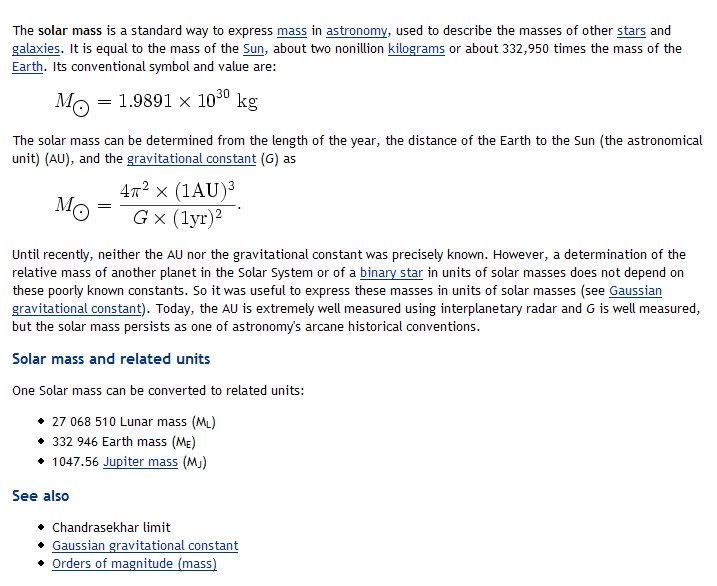
Science Myth: The Gravity of a Black Hole is stronger than the star that formed it.
CORRECT: We have no proof that all black holes are formed from stars but of those that are, the gravity is weaker than, not stronger than the star that formed it.

The gravity of a black hole is slightly weaker than, not stronger than, the gravity of the star which formed it, outside the Schwarzschild radius.

Isaac Newton's laws of gravitation state that, for an object with a spherically symmetric distribution of mass, two things affect how much gravitational force is felt by an observer: the mass of the object and the distance between the observer and the object's centre.

    A black hole has slightly less mass than the star which formed it, because when a star becomes a supernova, some of the star's mass is converted into energy according to Einstein's equation E = mc², and a great deal of the star's mass is returned to the interstellar medium.
  • The actual black hole is caused by a singularity.
  • Only when a distance of (slightly less than) the star's original radius is passed does gravity become greater.
  • Once the event horizon is passed the speed required to escape the black hole's gravity exceeds that of light.
As such, black holes are not similar to "cosmic vacuum cleaners".
Objects can settle into stable orbits around them just as they would around any other mass in space.


Now consider supermassive black holes. Scientists are currently surmising that there are supermassive black holes at the center of each galaxy and have recently discovered one in our nearest neighboring galaxy.

Current scientific thought of formation of black holes:
    Black holes of this size can form in several ways.
  • The most obvious is by slow accretion of matter (starting from a black hole of stellar size).
  • Another method of producing a supermassive black hole involves a large gas cloud collapsing into a relativistic star of perhaps a hundred thousand solar masses and up. The star then becomes unstable to radial perturbations due to electron-positron pair production in its core, and may collapse directly into a black hole with no supernova.
  • Yet another method involves a dense stellar cluster which undergoes core-collapse as the negative heat capacity of the system drives the velocity dispersion in the core to relativistic speeds.
  • Finally, it may be possible to construct primordial black holes directly from external pressure in the first instants of the Big Bang. The problem in forming a supermassive black hole is getting enough matter in a small enough volume. This matter needs to have nearly all of its angular momentum removed in order for this to happen. The process of transporting this angular momentum outwards appears to be the constraining factor in black hole growth, and leads to the formation of accretion disks.

Observationally, there currently appears to be a gap in the population distribution of black holes.
There are stellar mass black holes, generated from collapsing stars, which range up to perhaps 10 solar masses.
The minimal supermassive black hole is in the range of a hundred thousand solar masses.
Between these regimes appears to be a dearth of objects.
However, some models suggest that ultraluminous X-ray sources (ULXs) may be black holes from this missing group.


Okay, there you go. If you read the above, how many words did you look up in the dictionary while you read it? To me, a measure of intelligence isn't how much you know, but in knowing what you don't know. Understanding your gaps in knowledge. Given that, the more you looked things up while admitting you didn't really know what was being discussed, the more wisdom you have and the smarter you are or are becoming.
Image

Spoiler for Definitions:
Spoiler!


There are direct proportional correlations between supermassive black holes and galaxy mass.
    Nothing stated above (or in other places, I've searched) gives a satisfactory answer to my questions:
  • "How do SMBH (SuperMassive Black Holes) "know" how much their galaxy will weigh when or while they are being formed?"
  • "How could a supermassive black hole form in the center of a galaxy?"

I can almost hear the answer in my troubled mind now, "It takes Billions and Billions of Years" Damn you Carl, stop speaking in my head. Stop now! The Psychiatrist asked, "Do you hear voices? he sharpened his pencil and continued, "do you hear voices now?" my only reply was, "How could I answer if it were not true?"

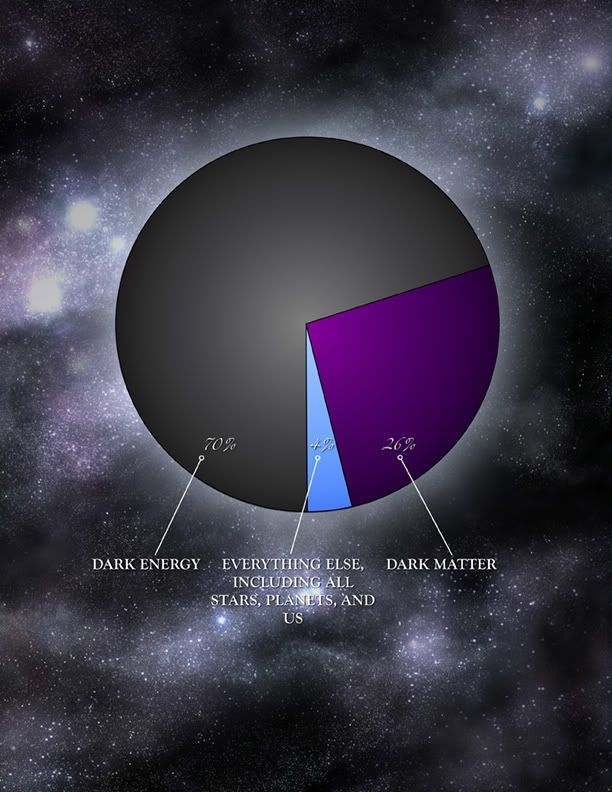
I have other questions too. I want to understand Dark Energy and Dark Matter. According to some, we are 'aware' of only about 4% of the 'stuff' of our universe. The rest is outside our direct perception.
YouTube of Bob MacDonald (lay off the caffeine, Bob)
Code: Select all
Image

  • A man of eighty has outlived probably three new schools of painting, two of architecture and poetry and a hundred in dress.

-- Lord Byron, English romantic poet

~Granps
User avatar
takolin
Senior Member
Posts: 4238
Joined: Wed Jan 03, 2007 11:13 am
Quick Reply: Yes
Location: Life

Re: Science Misconceptions

Post by takolin »

I never was a big fan of physics, but I can see the general misconception about the gravitything.

Mass of the original sun > Mass of the black hole
Radius of the original sun < radius of the black hole

Lets assume an object can stand on the surface of the original start and on the surface of the black hole. Where would it have the biggest influence of gravity?

I'm quite sure that it's on the black hole due to it's small size. Not the mention that the attraction is inversely proportional with the square of the radius.

F = G * M1*M2/R²


Anyway I don't like physics and there were quite a few things I didn't understand in the text, but I could understand the general purpose of the text.

User avatar
Barotix
Ex-Staff
Posts: 9250
Joined: Tue Jul 10, 2007 12:55 pm
Quick Reply: Yes
Location: Sand

Re: Science Misconceptions

Post by Barotix »

You know what I just realized? Grandpa and I are arguing the same point. (came to this conclusion upon reading your emphasis). The difference being; a divide in what we consider Scientific Misconceptions and Social misconceptions, but I understand (yours) as do you (mine).

We agree on everything, except the name. :P :x
So you want me to make a "debunking" thread? Kinda hard to debunk things by just typing (hands on person), Magnetism or Gravity.

  1. Social Misconception: Did you know that children are taught there is only one type of black hole (as long as we're on the subject of black holes). They are told black holes are stationary, funny thing: We (being man) Have, in recent times, found stray black holes that move :shock:.
  2. Social and Scientific Misconception: Life started in warm regions on the earth. The surprising matter; There appears to be a fledging theory that life may have started in Ice-Water, sadly the progenitor of the theory is dead, and most of his data has been lost (or) destroyed. I am looking for an article to cite, atm.
  3. Social Misconception: Another fledging theory: This one's creator is still live and well. It postulates that there was not one but instead several big bangs. Each constantly occurring off the outskirts of the "end" of each universe. I would make an illustration, but its the morning.
  4. Another: Social Misconception: Life (can/does) only exist on earth. Funny thing, it doesn't take a genius to realize that is (one of) the single most biased statements from our wonderful species.
  5. Social Misconception: There is only one way to make discoveries. Grandpa covered this in his first post.

*People live in their own Universe, governed by Preconceived Notions. Governed by outdated, archaic Heuristics. Sometimes, for their own well-being it is best to leave them in ignorance.
*Social Misconception = Scientific Misconception, depending on your age and knowledge.
*Yours and Mine referring to points.
*Will add citations, and sources and breakfast.
*Must critique number four.

Grandpa makes the best threads. :love:
Maddening
Image

User avatar
Grandpa
Active Member
Posts: 867
Joined: Tue Feb 26, 2008 5:54 am
Quick Reply: Yes
Location: Off Topic

Re: Science Misconceptions

Post by Grandpa »

takolin wrote:I never was a big fan of physics, but I can see the general misconception about the gravitything.

Mass of the original sun > Mass of the black hole
Radius of the original sun < radius of the black hole

Lets assume an object can stand on the surface of the original start and on the surface of the black hole. Where would it have the biggest influence of gravity?

I'm quite sure that it's on the black hole due to it's small size. Not the mention that the attraction is inversely proportional with the square of the radius.

F = G * M1*M2/R²


Anyway I don't like physics and there were quite a few things I didn't understand in the text, but I could understand the general purpose of the text.
takolin, thanks for the information and I'll admit readily that I'm outta my depth here too. This confused me so I thought I'd ask before I went on a wild goose chase. Everyone would agree about your observation regarding the force of gravity within or past the event horizon of the black hole - it is sooo extreme that light can not escape. The myth that was debunked concerned the force felt at a distance, a very intriguing subject. Now onto the 'basics' and then my question:

  • F = Force (for objects close to the Earth) = Force pulling object(s) toward the Earth (also the 'weight' of the object)
  • G = Acceleration due to the Force of Gravity (often misnamed as "Acceleration of Gravity" but Gravity doesn't not accelerate)
  • M = Mass
This acceleration due to the force of gravity on Earth g equals 32 ft/s² (9.8 m/s² in the metric system)

SO THAT F = MG

and where
  • W is weight
  • M is mass
  • G is acceleration due to gravity

W = MG
(Your weight can actually be slightly less than w = mg because of the effect of the gravity from the Moon and near negligible effect other celestial objects pulling you upward.)

The above from the 17th Century and Sir Isaac Newtons Theory of Universal Gravitation for objects on Earth.

From there we introduce 20th century thought and Einstein and the General Theory of Relativity to explain gravitational force basically stating that TimeSpace is curved and warped. Einstein said gravity was similar to acceleration and that is it caused by a curvature of space. He postulated that TimeSpace was distorted by the presence of matter.

Then and in more recent the attempt to formulate a Universal Theory brought Einsteins thoughts under the scrutiny of the rules of Quantum Mechanics or Quantum Physics—the study of matter at extremely shorts distances. Thus, scientists predicted that a gravitational field would exhibit wavelengths, similar to electromagnetic waves. Using highly sensitive instruments, experiments were made to verify that gravity is indeed a waveform of some sort.

To follow the wave-particle duality in Quantum Physics, it was also predicted that gravity consists of particles called gravitons. This idea wasn't 'new' and much of Einstein's work on the Specific Theory of Relativity was used and expanded upon. This is similar to the theory that light is not only a waveform, but also consists of particles called photons. Electrons are also viewed as both particles and waves.
_________________________________________

:D All this because somebody said, "How does a force (gravity) work at a distance??" The mystery of being able to push or pull something at distance suggests witchcraft (to me). Can you see Samantha from Bewitched twinkling her nose and moving things? Or Endora, with a flick of her wrist tossing water at Derwin? The effect of Gravity at great distance MUST have a methodology, yes?

When speaking of forces that operate at a distance, Barotix mentions Gravity -and- Magnetism (aka "Electro-Magnetic Force")
Ron Kurtus wrote: (revised 26 March 2004)

Forces can be divided into those that act by direct contact—such as when you push on a door to open it—and those that that act at a distance, where there is no apparent physical contact between the objects. Gravity and magnetism are examples of forces that act at a distance. It is difficult to explain how such a force is possible.

_________________________________________

Pardon my tangent, but what I really wanted to ask is "Is gravity effected by the radius of the object?"

Barotix wrote:*People live in their own Universe, governed by Preconceived Notions. Governed by outdated, archaic Heuristics. Sometimes, for their own well-being it is best to leave them in ignorance.
*Social Misconception = Scientific Misconception, depending on your age and knowledge.
*Yours and Mine referring to points.
*Will add citations, and sources and breakfast.
*Must critique number four.

Grandpa makes the best threads. :love:

@Barotix: Looking forward to your update.
Once a member of this forum stated, "I love Grandpa" and I was quite flattered.
Allow me to turn that around, sir. "Grandpa loves Barotix" :love:
ty for caring enuf to listen twice :) (and apply a 'age filter' to my statements :P )

~ Gonna close for now - want to search about Gravity (one of my favorite subjects)...
Didn't know about takolin's formula (F = G * M1*M2/R²) and would like to speak semi-intelligently if and when he reposts.

Spoiler!


~Granps
Last edited by Grandpa on Sun Jun 08, 2008 7:59 pm, edited 1 time in total.

User avatar
dom
Global Moderator
Global Moderator
Posts: 9962
Joined: Wed Mar 08, 2006 10:46 pm
Quick Reply: Yes
Location: västkustskt

Re: Science Misconceptions

Post by dom »

Barotix wrote:You know what I just realized? Grandpa and I are arguing the same point. (came to this conclusion upon reading your emphasis). The difference being; a divide in what we consider Scientific Misconceptions and Social misconceptions, but I understand (yours) as do you (mine).

We agree on everything, except the name. :P :x
So you want me to make a "debunking" thread? Kinda hard to debunk things by just typing (hands on person), Magnetism or Gravity.

  1. Social Misconception: Did you know that children are taught there is only one type of black hole (as long as we're on the subject of black holes). They are told black holes are stationary, funny thing: We (being man) Have, in recent times, found stray black holes that move :shock:.
  2. Social and Scientific Misconception: Life started in warm regions on the earth. The surprising matter; There appears to be a fledging theory that life may have started in Ice-Water, sadly the progenitor of the theory is dead, and most of his data has been lost (or) destroyed. I am looking for an article to cite, atm.
  3. Social Misconception: Another fledging theory: This one's creator is still live and well. It postulates that there was not one but instead several big bangs. Each constantly occurring off the outskirts of the "end" of each universe. I would make an illustration, but its the morning.
  4. Another: Social Misconception: Life (can/does) only exist on earth. Funny thing, it doesn't take a genius to realize that is (one of) the single most biased statements from our wonderful species.
  5. Social Misconception: There is only one way to make discoveries. Grandpa covered this in his first post.

*People live in their own Universe, governed by Preconceived Notions. Governed by outdated, archaic Heuristics. Sometimes, for their own well-being it is best to leave them in ignorance.
*Social Misconception = Scientific Misconception, depending on your age and knowledge.
*Yours and Mine referring to points.
*Will add citations, and sources and breakfast.
*Must critique number four.

Grandpa makes the best threads. :love:


YOU HAVE BEEN DEFEATED.
Image

User avatar
Grandpa
Active Member
Posts: 867
Joined: Tue Feb 26, 2008 5:54 am
Quick Reply: Yes
Location: Off Topic

Re: Science Misconceptions

Post by Grandpa »

dom wrote:
YOU HAVE BEEN DEFEATED.
:? WTH?
dom, do you believe that an apology represents an admission of weakness? I don't. I very much respect your talents but there are some things about you (me) that we can just agree to disagree on, aren't there? The whole world is black and white, right? Again, you're being silly. :P

Mr. Granps

User avatar
Barotix
Ex-Staff
Posts: 9250
Joined: Tue Jul 10, 2007 12:55 pm
Quick Reply: Yes
Location: Sand

Re: Science Misconceptions

Post by Barotix »

dom wrote:
Barotix wrote:You know what I just realized? Grandpa and I are arguing the same point. (came to this conclusion upon reading your emphasis). The difference being; a divide in what we consider Scientific Misconceptions and Social misconceptions, but I understand (yours) as do you (mine).

We agree on everything, except the name. :P :x
So you want me to make a "debunking" thread? Kinda hard to debunk things by just typing (hands on person), Magnetism or Gravity.

  1. Social Misconception: Did you know that children are taught there is only one type of black hole (as long as we're on the subject of black holes). They are told black holes are stationary, funny thing: We (being man) Have, in recent times, found stray black holes that move :shock:.
  2. Social and Scientific Misconception: Life started in warm regions on the earth. The surprising matter; There appears to be a fledging theory that life may have started in Ice-Water, sadly the progenitor of the theory is dead, and most of his data has been lost (or) destroyed. I am looking for an article to cite, atm.
  3. Social Misconception: Another fledging theory: This one's creator is still live and well. It postulates that there was not one but instead several big bangs. Each constantly occurring off the outskirts of the "end" of each universe. I would make an illustration, but its the morning.
  4. Another: Social Misconception: Life (can/does) only exist on earth. Funny thing, it doesn't take a genius to realize that is (one of) the single most biased statements from our wonderful species.
  5. Social Misconception: There is only one way to make discoveries. Grandpa covered this in his first post.

*People live in their own Universe, governed by Preconceived Notions. Governed by outdated, archaic Heuristics. Sometimes, for their own well-being it is best to leave them in ignorance.
*Social Misconception = Scientific Misconception, depending on your age and knowledge.
*Yours and Mine referring to points.
*Will add citations, and sources and breakfast.
*Must critique number four.

Grandpa makes the best threads. :love:


YOU HAVE BEEN DEFEATED.


Whose a what know? Defeated? This wasn't a battle for ultimate supremacy. I misunderstood his premise when I first read the thread, so I went out to defeat the misunderstood premise. Apparently I had a straw man version of what he typed set in my head and was arguing against an illusion. :shock:

I still have my disagreements with Grandpa (minor things), but that doesn't mean we can't agree on some things.

Dom's just jealous, I has hearts for you to.
:love: :love: :love: :love: :love: :love: :love: (no homo) >.>

EDIT: I still need to add citations and an Illustration. (=_=);
Last edited by Barotix on Sun Jun 08, 2008 8:21 pm, edited 1 time in total.
Maddening
Image

User avatar
Grandpa
Active Member
Posts: 867
Joined: Tue Feb 26, 2008 5:54 am
Quick Reply: Yes
Location: Off Topic

Re: Science Misconceptions

Post by Grandpa »

Barotix wrote:
dom wrote:
YOU HAVE BEEN DEFEATED.


Whose a what know? Defeated? This wasn't a battle for ultimate supremacy. I misunderstood his premise when I first read the thread, so I went out to defeat the misunderstood premise. Apparently I had a straw man version of what he typed set in my head and was arguing against an illusion. :shock:

I still have my disagreements with Grandpa (minor things), but that doesn't mean we can't agree on some things.

Dom's just jealous, I has hearts for you to.
:love: :love: :love: :love: :love: :love: :love: (no homo) >.>

dom has a long memory > LINK < and is probably still smarting from the spanking he took after the first words he spoke to me, "Have you ever read shakespeare?"

@ dom: Sniping the thread isn't the best portrayal of your personality, friend. I'm seriously not 'baiting' this thread for another Creationism styled debate, in point of fact the previous one was very limited (on my part). If you wish to engage with me I'd suggest doing it openly by making a thread and inviting my participation.

Mr. Grandpa
Last edited by Grandpa on Sun Jun 08, 2008 8:24 pm, edited 1 time in total.

User avatar
dom
Global Moderator
Global Moderator
Posts: 9962
Joined: Wed Mar 08, 2006 10:46 pm
Quick Reply: Yes
Location: västkustskt

Re: Science Misconceptions

Post by dom »

Grandpa wrote:
Barotix wrote:
dom wrote:
YOU HAVE BEEN DEFEATED.


Whose a what know? Defeated? This wasn't a battle for ultimate supremacy. I misunderstood his premise when I first read the thread, so I went out to defeat the misunderstood premise. Apparently I had a straw man version of what he typed set in my head and was arguing against an illusion. :shock:

I still have my disagreements with Grandpa (minor things), but that doesn't mean we can't agree on some things.

Dom's just jealous, I has hearts for you to.
:love: :love: :love: :love: :love: :love: :love: (no homo) >.>

dom has a long memory > LINK < and is probably still smarting from the spanking he took after the first words he spoke to me, "Have you ever read shakespeare?"

Sniping the thread isn't the best portrayal of your personality, friend.


Nope, you're not a special case. I treat most threads the same, follow the link for reassurance: search.php?author_id=1027&sr=posts

And I wouldn't exactly call it a spanking. I just don't have the heart to type our 1 page replies every other hour, debating trivial things over a gaming forum for the youth. However, I will admit that I don't necessarily read the topics anymore either.
Image

User avatar
Grandpa
Active Member
Posts: 867
Joined: Tue Feb 26, 2008 5:54 am
Quick Reply: Yes
Location: Off Topic

Re: Misconceptions within Science

Post by Grandpa »

To takolin, the light goes on:
"Only when a distance of (slightly less than) the star's original radius is passed does gravity become greater."

Segue into magnetism (aka The Electro-Magnetic Force) under spoiler for those interested:
Spoiler!


It seems that anything people have learned prior to puberty takes on the status of an immutable truth. So, if science (or pseudo-science) is taught as dogma to the prepubescent they will know in their hearts that their 8th Grade Teacher (or their precious Mumsie) was actually right and that any attempt to debunk the myth is the enemy of their established order, hence a DESTROYER to be resisted tooth and nail.

The damage is done, the mind is frozen and the prepubescent dogma lasts a lifetime.
Be very, very careful what you put into that head,
because you will never, ever get it out.

    Thomas Cardinal Wolsey (1471-1530)
Image

The subject has become "Gravity and Magnetism" sub-titled "Forces That Act at a Distance".
To me, the challenge is too broad.

For instance, if we discuss pressure at the most basic level, we usually relate it to the forces between colliding particles in some sort of fluid (fluids for the sake of conversation can be air). The physical idea most pertinent in talking about collisions of any sort is the conservation of momentum and of energy (although, we have to be careful about conservation of energy, as kinetic energy is not necessarily conserved). Light can carry both energy and momentum and we talk about collisions involving light just as easily as when we are speaking of collisions only involving matter. Since light can transfer energy and momentum to matter (and vice versa), we should be able to observe pressure caused by light.

There are physical limitations to our observations as well. Quantum Mechanics and Heisenberg's Uncertainty Principle demonstrate this.

To explain "gravity" or "magnetism" we would abandon the thoughts about collisions because there are no directly observable 'gravitons', only those intangible quasi-objects postulated by higher math. This isn't uncommon though. Sir Issac Newton stated that he actually 'discovered' gravity while young but did not present it until after he presented a whole new branch of mathematics, called fluxions, to support his ideas. This later became modern calculus.

When Einstein invented a new theory of gravity, he, too, used an obscure bit of mathematics called tensors. It seems that every time there is a theory of gravity, it is mixed up with "fringe" mathematics. Our observations and conclusions about Magnetism and Gravity might have to wait until we have sufficient advances in mathematics to be able to present sufficiently documented theories. This goes back to my first statements though -- about 'happy accidents'. Math Theory is well beyond my abilities and I doubt that any progress can be made here (by me or on the SRForums).
Spoiler!

Pardon the next, because I stated this would not be about 'religion', but both scientists (Newton and Einstein) were theists. Seems to me that trying to know more about our Creator by observing creation is a common element to many discoveries within my culture. This is not to discount the discoveries made by other great minds, only pointing to (albeit in a vain manner) how my mind works. When I attempt to 'discover' new (to me) thoughts, I find it helpful to read ancient texts. Strange, isn't it?


~Granps
Post Reply

Return to “Off Topic Lounge”